Airdrop Hunt Guide for Free Tokens Earn Crypto Airdrops Safely 2026
Airdrop hunt guide for free tokens: learn safe, legit strategies, eligibility tips, wallets, and farming methods to earn crypto airdrops in 2026.

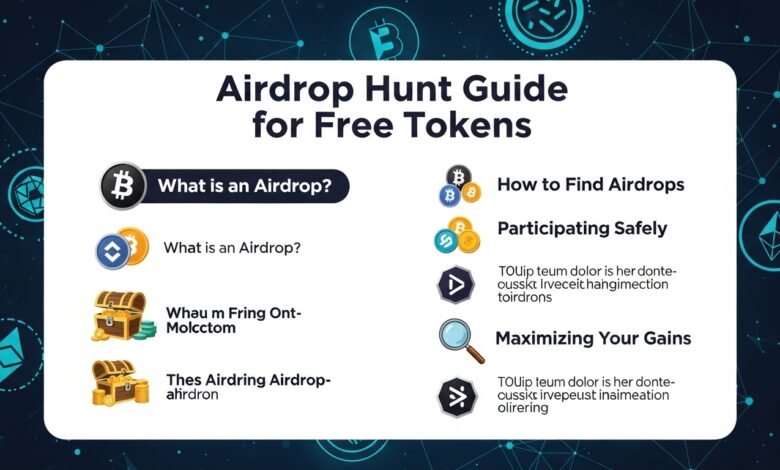
Airdrop hunt guide for free tokens that doesn’t recycle the same generic advice, you’re in the right place. Crypto airdrops can feel like “free money,” but the reality is more nuanced: the best opportunities usually reward genuine participation, consistent on-chain behavior, and clean wallet hygiene. In 2026, many teams use eligibility filters, anti-bot systems, and Sybil resistance checks to make sure tokens go to real users, not farms of fake accounts.
That’s good news if you’re willing to learn a repeatable system. This airdrop hunt guide for free tokens will show you how to find promising airdrops early, interact with projects safely, improve airdrop eligibility, and avoid scams that drain wallets. You’ll also learn how airdrop snapshots work, what “retroactive” rewards mean, and how to ensure your activity looks organic rather than robotic.
What Crypto Airdrops Really Are (and Why They’re Not Always “Free”)
A crypto airdrop is a token distribution method where a project gives tokens to users, usually to bootstrap adoption, decentralize ownership, or reward early supporters. People often search Google for free crypto airdrops, but the most valuable drops typically require time, attention, and small transaction fees. That doesn’t make them bad. It simply means the “cost” is usually effort and gas, not a purchase price.
In modern markets, you’ll see several common patterns. One is the retroactive airdrop, where a protocol rewards users after they’ve already used the product. Another is the testnet airdrop, where teams encourage users to test features before mainnet launch. There are also marketing-style campaigns that reward social actions, but these tend to be lower quality and more prone to spam and scams.
A smart airdrop hunt guide for free tokens focuses on high-signal opportunities where your actions align with what the protocol actually needs: liquidity, swaps, bridging, borrowing, governance participation, or real usage across time.
Why Projects Airdrop Tokens in 2026

Projects want real users, not just short-term mercenaries. They airdrop tokens to acquire users, reward behavior that improves network effects, and decentralize governance. In 2026, airdrops are also used to attract developers, validators, liquidity providers, and community contributors, depending on the chain.
Why Many People Miss the Best Airdrops
Most people interact once, do the bare minimum, and vanish. Others follow fake “alpha” that pushes them into phishing links. The winning approach is boring and consistent: you use a handful of credible ecosystems, spread activity over time, keep your wallet clean, and focus on actions that demonstrate real adoption.
Airdrop Hunt Guide for Free Tokens: The 2026 Playbook That Actually Works
The core of this airdrop hunt guide for free tokens is simple: behave like a genuine user, not a scripted farmer. That doesn’t mean you can’t be strategic. It means you should prioritize quality interactions that projects can measure and verify.
Start by choosing a small set of ecosystems where airdrops are common and where new protocols launch frequently. Historically, that has included Ethereum airdrops, Layer 2 airdrops, and fast-moving ecosystems like Solana airdrops. Then build a habit of doing real actions weekly, not just one-day sprints.
The playbook has five pillars. First, discovery: you need reliable sources for upcoming drops. Second, safety: you must protect keys and avoid malicious contracts. Third, on-chain footprint: you want consistent, human-like usage across time. Fourth, documentation: you track what you did and where. Fifth, discipline: you avoid overpaying fees or chasing low-quality campaigns.
Build a “Clean Wallet” Setup Before You Start
If you’re serious about airdrop farming, separate your activity into at least two wallets: a vault wallet and an activity wallet. The vault wallet holds long-term assets and never connects to random sites. The activity wallet is used for interacting with protocols.
This setup matters because airdrop hunters are prime targets for scams. Many drains happen because people connect the wallet that holds their main funds to an unknown dApp and sign approvals they don’t understand. In this airdrop hunt guide for free tokens, the rule is strict: your activity wallet should hold only what you’re comfortable risking.
Understand the Basic Eligibility Signals
Most teams look for a combination of volume, frequency, diversity, and duration. That means multiple interactions across time, not one burst. It also means using more than one feature: swapping, bridging, lending, staking, governance, or providing liquidity, depending on the protocol’s design. Don’t overdo it with spammy micro-transactions. Many teams filter out obvious farming behavior. A natural pattern is a few meaningful transactions per week, with occasional exploration of new features.
How to Find Legit Airdrops Without Getting Scammed
People often Google how to find legit airdrops because the space is flooded with fake claims. A real airdrop hunt guide for free tokens needs a strict verification process. A legitimate airdrop usually has a clear project identity, reputable backers or visible builders, a real product, and community channels that have consistent activity. Scams often rely on urgency, fake “claim now” pages, and requests for private keys or seed phrases. No legitimate project will ever ask for your seed phrase. Not once. Not ever.
Use an Airdrop Tracker, but Verify Everything
An airdrop tracker can be useful for discovery, but you should treat it as a starting point, not a source of truth. Cross-check announcements on the project’s official website and official social accounts. Look for consistent messaging, not one-off posts.
Read the Token and Claim Mechanics Carefully
Even legitimate airdrops can have tricky claim mechanics. A claim contract can be safe, but third-party “claim helper” sites can be malicious. The safest behavior is to navigate from official sources, confirm the domain, and verify contract addresses where possible.
Airdrop Eligibility, Snapshots, and Sybil Filters Explained in Plain English
This is where most guides become vague, so let’s make it practical. Airdrop eligibility is the set of rules that determine who qualifies. Teams may use on-chain data, off-chain contributions, or both. Some use point systems. Others use “snapshots,” which are records of blockchain states at a particular time.
An airdrop snapshot might capture balances, transaction history, or contract interactions on a specific date. If you only became active after the snapshot, you might miss the airdrop entirely. This is why consistent behavior matters: you can’t time every snapshot, but you can keep yourself in the eligible zone across multiple projects.
In 2026, many teams also apply Sybil filters. That means they try to detect people running many wallets to farm rewards. They might analyze funding sources, interaction patterns, repeated behavior, and network clusters. If your wallets look like clones, you may get filtered out.
How to Look “Human” On-Chain Without Overthinking It
A human pattern is varied. Sometimes you swap, sometimes you bridge, sometimes you stake. The amounts aren’t always identical. The timing isn’t always the same hour every day. You don’t need to roleplay randomness, but you should avoid patterns that scream automation.
When a Single Wallet Is Better Than Many
If you’re new, one well-maintained activity wallet often beats five weak wallets. Many projects punish obvious multi-wallet behavior. A careful airdrop hunt guide for free tokens prioritizes depth over shallow breadth.
Best On-Chain Activities That Commonly Lead to Retroactive Airdrops

Most high-value drops reward actions that directly help a protocol grow. The following sections explain what those actions are, in paragraph form, so you can apply them without turning this into a checkbox game.
Swapping and Routing Volume the Smart Way
Swaps matter because they generate fees, demonstrate demand, and validate liquidity. If a protocol has its own swap router or DEX, using it over time can be a meaningful eligibility signal. If you do swaps, keep them reasonable. Don’t churn volume just for the sake of it, especially if fees are high.
Bridging Across Ecosystems
Bridging is one of the strongest signals for many Layer 2 airdrops and cross-chain protocols. Bridges show that you’re moving capital and adopting an ecosystem. However, bridges are also a common scam vector. Always verify domains and use reputable infrastructure.
Lending, Borrowing, and Repaying
For DeFi airdrops, lending and borrowing activity can be a powerful signal because it demonstrates trust in the protocol and generates utilization. A simple, responsible loop looks like depositing collateral, borrowing a conservative amount, and repaying later. Doing this across time, not all at once, often looks more organic.
Staking, Restaking, and Governance Participation
If a protocol has staking or governance, interacting there can matter. Governance participation is especially important for decentralization-focused projects. Voting, delegating, or participating in proposals can be strong proof of genuine interest.
Testnets That Actually Matter
A testnet airdrop is never guaranteed, but teams do sometimes reward testers, especially if they want broad feedback. The key is to choose testnets that have active development, a credible team, and real community traction. “Random faucet farming” on abandoned testnets is usually wasted time.
Ecosystem Strategy: Ethereum, Layer 2, Solana, and Beyond
A lot of first-page Google searches revolve around ecosystem-specific opportunities, like Ethereum airdrops or Solana airdrops. A good strategy is to pick ecosystems where new apps launch frequently, then build consistent activity that can qualify you across multiple projects.
With Ethereum and major Layer 2 networks, opportunities often arise from new DEXs, lending markets, bridges, and account abstraction tooling. With Solana, the pace of new apps can be fast, and activity can be cheaper, but you still need to be careful about fake links and impersonators. The best approach is to pick a few credible ecosystems and rotate your activity. That keeps costs manageable and prevents you from spreading yourself too thin.
Managing Gas Fees Without Killing Your ROI
Gas is the hidden cost that turns “free” into expensive. If you’re using Ethereum mainnet heavily, you may spend more on gas than the airdrop is worth. Many hunters focus on Layer 2 activity to reduce fees while still staying in high-signal environments. This airdrop hunt guide for free tokens treats gas like a budget, not an afterthought.
Security Rules That Protect You While Airdrop Hunting
The fastest way to lose money is to chase free crypto airdrops without a security checklist. You don’t need paranoia. You need routines. First, never share your seed phrase, and never type it into a website. Second, use a dedicated activity wallet. Third, regularly review token approvals, because unlimited approvals are a common drain method. Fourth, be suspicious of “claim” pages shared in replies, DMs, or fake ads. Fifth, don’t install random browser extensions that promise airdrop automation, because those are a frequent malware delivery route.
A careful airdrop hunt guide for free tokens also recommends slow, deliberate signing. Read what you’re signing. If the wallet shows an approval for an unknown token with unlimited spending, stop. If the contract address looks different from the official one, stop.
How Scammers Commonly Target Airdrop Hunters
Impersonation is the number one tactic. Scammers copy logos, clone websites, and buy ads so their fake claim page appears at the top of search results. They also post “claim now” links under official announcements. The antidote is always the same: navigate from official sources, verify the domain, and never rush.
Tracking Your Progress Like a Pro (Without Overcomplicating It)
One of the most underrated edges in airdrop farming is documentation. Not because you need a fancy dashboard, but because you will forget what you interacted with, when you did it, and on which wallet. That leads to missed claims and confusion during eligibility windows.
A simple system is to maintain a private record of project names, dates, wallet used, and what you did. When a token distribution announcement happens, you can quickly check whether you interacted and where. This also helps you avoid repeating pointless actions or paying fees for redundant steps. Over time, this record becomes your personal airdrop tracker, tailored to your behavior and risk tolerance.
First-Page Google Keywords You Should Naturally Include in Your Strategy
People often search for broad phrases that show up on the first page, such as best crypto airdrops, airdrops 2026, legit airdrops, airdrop claim, airdrop checker, airdrop eligibility, retroactive airdrop, and free crypto. The trick is not to stuff them into every sentence, but to understand the intent behind them. When someone searches “airdrop checker,” they want to know if they qualify. That means you should pay attention to official eligibility tools and avoid third-party clones.
When someone searches “best crypto airdrops,” they usually want high-quality projects, which means focusing on real products and strong teams rather than random social tasks. When someone searches “retroactive airdrop,” they’re looking for on-chain actions that can be rewarded later, which means consistent protocol usage across time. This airdrop hunt guide for free tokens is designed around that real intent: doing legitimate actions that can be measured, rewarded, and verified.
Conclusion
Airdrops are still one of the most interesting ways to earn tokens, but the era of effortless giveaways is mostly gone. In 2026, the best rewards increasingly go to users who behave like real community members: they use products, provide value, stay consistent, and protect themselves from scams. If you follow this airdrop hunt guide for free tokens, your edge comes from discipline. You’ll spend less on random “claim now” chaos, you’ll improve airdrop eligibility through genuine on-chain actions, and you’ll build a repeatable system that compounds over time.
If you want results, pick two or three ecosystems, set a weekly routine, keep your activity wallet safe, and track what you do. Then commit to applying this airdrop hunt guide for free tokens for the next four weeks and watch how much clearer and safer your hunting becomes.