
Bitcoin fell below $80,000 on Saturday for the first time in more than a month as the United States began evacuating personnel from embassies and military bases across the Middle East over intelligence that Iran is preparing attacks on Americans.
Summary
- Bitcoin fell 2.2% in 24 hours to $79,700 on Saturday, its weakest level in more than a month, according to CoinDesk.
- The U.S. is evacuating embassy and military personnel across the Middle East after intelligence suggested Iran is preparing attacks on Americans.
- About $645.36 million of crypto positions were liquidated in 24 hours, with roughly 78% of the total in long positions.
- Ether fell 4.5% to $2,294, while XRP and Solana also dropped between 3% and 4%.
The evacuation followed a Wall Street Journal report on Saturday morning. A Friday memo from Director of National Intelligence Jay Clayton to Secretary of State Marco Rubio said Iranian lethal plotting against U.S. citizens had “reached advanced stages.”
President Donald Trump, speaking at a rally in Florida on Friday, threatened possible re-escalation against Iran after the early-November midterm elections.
A break below $80,000 triggered a liquidation hour
Bitcoin touched about $79,750 as it broke below $80,000, roughly 6% below Wednesday’s push toward $85,000. In the single hour of the break, $233.13 million of positions were liquidated, $219.93 million of them longs, according to CoinGlass data reported by BtcMedia.
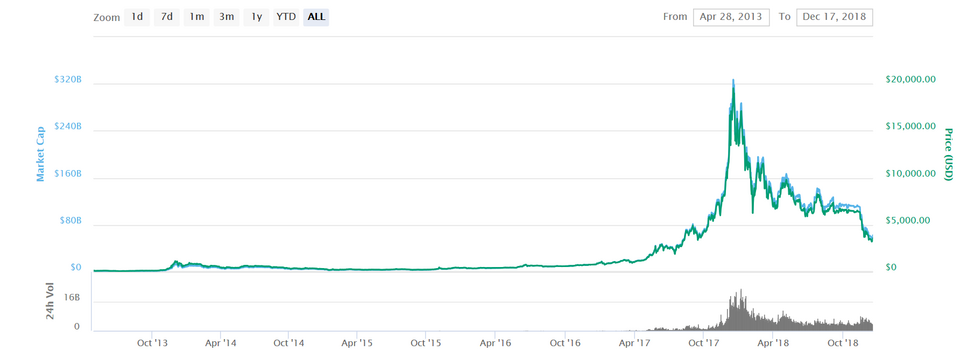
Across the full 24 hours, liquidations reached $645.36 million, of which $504.53 million — about 78% — were long positions, leaving leveraged buyers carrying most of the losses.
Weekend markets left crypto exposed
With traditional markets closed for the weekend, crypto traded as the only live gauge of geopolitical risk. Bitcoin later changed hands around $79,384, down 2.6% over 24 hours, while ether’s 4.5% drop to $2,294 showed the selling extended across major tokens.
The move also puts Bitcoin within sight of technical levels traders were already watching after two days of heavy ETF outflows, with the Federal Reserve’s October 28 decision still ahead.