Best Crypto Security Solutions for Investors (2026 Guide)
best crypto security solutions for investors: hardware wallets, cold storage, 2FA, custody options, and anti-phishing tips for safer investing.

Best crypto security solutions for investors isn’t just a “nice to have” anymore—it’s the difference between owning your assets and losing them to a scam, a leak, or a simple mistake. Crypto gives you control, but that control comes with responsibility: your wallet, devices, accounts, seed phrase, and daily habits all become part of your security system. And here’s the hard truth: most losses don’t happen because a blockchain gets “hacked.”
They happen when people get tricked, rushed, or exposed through weak account protection, fake apps, phishing links, SIM swaps, or insecure storage. The good news is you can dramatically reduce risk by combining a few proven layers—cold storage, strong authentication, smart custody choices, and clear operational routines—without becoming a cybersecurity expert. This guide breaks down what actually works, how to choose the right setup, and how to protect your portfolio confidently in 2026.
Why Crypto Security Matters for Investors
Crypto investing is unique because security is personal. In traditional finance, banks and brokers act as safety nets with passwords resets, fraud departments, and account recovery processes. In crypto, “being your own bank” means you must protect keys, recovery phrases, devices, and every login that touches your funds.
Investors are targeted because attackers follow money. Even small portfolios are valuable if compromised at scale. That’s why crypto wallet security, crypto security best practices, and crypto scam prevention are some of the most searched topics on Google. The best approach is to build a layered defense: a secure wallet strategy, hardened accounts, safe transaction habits, and a clear plan for storage, trading, and long-term holding. Security also affects decision-making. When your setup is strong, you’re less likely to panic, rush withdrawals, or fall for urgent “support” messages. Confidence comes from process, not luck.
Best Crypto Security Solutions for Investors: The Layered Security Model
The best crypto security solutions for investors are not a single product. They’re a system made of layers that back each other up. One layer might fail, but the whole system still holds. A practical layered model usually includes a secure storage method, a protected on-ramp (exchange access), hardened identity and authentication, and safe transaction behavior.
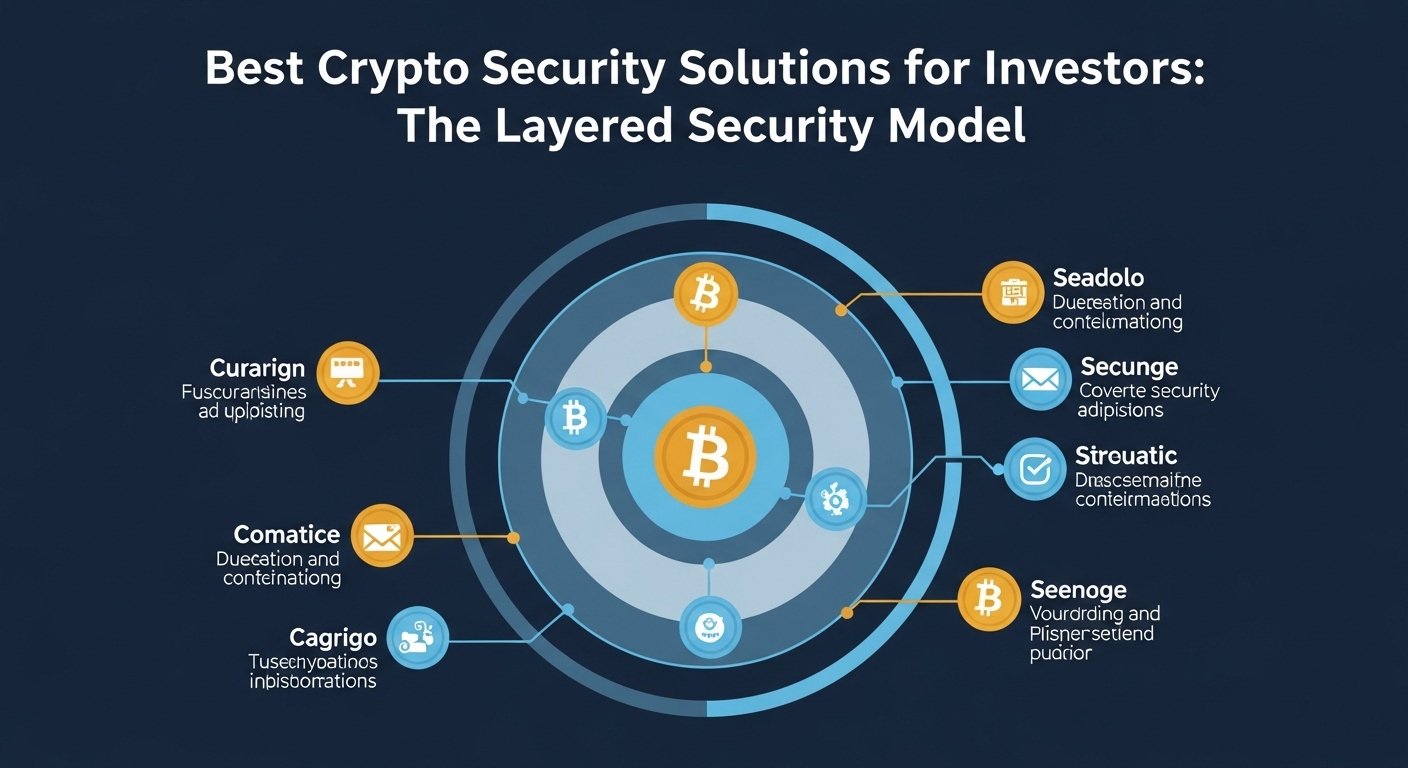
When these layers work together, you reduce exposure to the most common attack paths: stolen credentials, compromised devices, seed phrase theft, and social engineering. You’ll also want to separate “spending” crypto from “investing” crypto. The wallet you use for DeFi, minting, and apps should not be the same wallet that holds your long-term portfolio. That separation alone prevents many disasters.
Hardware Wallets and Cold Storage for Long-Term Holding
If your goal is long-term investing, hardware wallet protection is one of the strongest foundations you can build. A hardware wallet is a device designed to keep your private keys offline, signing transactions securely even when connected to a computer. This reduces the risk from malware, keyloggers, and browser attacks.
Cold storage means your keys remain offline as much as possible. This can include hardware wallets, air-gapped signing setups, or deep cold storage procedures. For most investors, a reputable hardware wallet plus a careful seed phrase routine is the simplest and safest path. The main point is this: long-term holdings should be stored in a way that doesn’t rely on your everyday laptop security. Even a “clean” computer can get compromised over time. Cold storage makes your portfolio harder to reach.
Choosing a Hardware Wallet Without Overcomplicating It
When selecting a hardware wallet, prioritize security track record, transparent development practices, and a smooth user experience. Investors abandon complex setups, and abandoned security fails silently. Look for a wallet that supports the assets you hold and fits your investing style. If you trade frequently, you may prefer a workflow that allows quick signing without constant friction. If you mostly hold, you may prefer a setup that stays offline and only connects when necessary. Whatever device you choose, your security depends on how you store and protect the recovery phrase. The device is replaceable. The seed phrase is not.
Seed Phrase Protection: The Real Security Core
Most losses happen when someone exposes their recovery phrase, stores it in cloud notes, screenshots it, or shares it with “support.” If an attacker gets your seed phrase, they can drain funds without touching your device. Treat your phrase like the master key. Don’t type it into websites. Don’t save it in email drafts. Don’t take photos. Store it offline in a secure location, and consider durable storage for fire and water protection. If you want to go further, use passphrases and multi-location storage—carefully and deliberately. This is where seed phrase protection becomes a top-tier part of the best crypto security solutions for investors.
Multi-Signature Wallets and Smart Custody for Bigger Portfolios
As portfolios grow, investors often need stronger controls. That’s where multi-signature wallet setups and professional custody options can shine. Multi-signature (multisig) requires multiple approvals before funds move. If one device is lost or compromised, the attacker still can’t transfer funds without other signatures. Multisig can be great for families, business partners, and serious investors who want governance and redundancy. It’s also a practical path for people who worry about single points of failure.
For investors who prefer convenience and oversight, institutional crypto custody and crypto custody solutions offer professionally managed storage, sometimes with insurance, controls, and audit processes. The trade-off is you may rely on a third party and must assess counterparty risk. Still, for some investors, managed custody is the right balance of safety and operations.
Self-Custody vs Custody Providers: Which Is Safer for You?
There isn’t one universal answer. Self-custody gives you control, but mistakes can be unforgiving. Custody providers can reduce operational risk, but you assume platform risk. A strong approach is to split exposure. You might keep a portion in self-custody cold storage and a portion with a reputable custody solution. This diversification reduces reliance on any single system.
If you’re deciding between self-custody and third-party custody, focus on your personal risk: are you more likely to get phished, misplace backups, or make rushed mistakes? The best crypto security solutions for investors match your real behavior, not your ideal behavior.
xchange Account Security: Protect Your Trading Access
Even if you store long-term holdings in cold storage, you’ll likely use an exchange at some point. That makes secure crypto exchange access a priority. Attackers commonly target exchange logins using phishing, credential stuffing, SIM swaps, and fake customer support.
Start with the basics: use a unique password, stored in a reputable password manager, and enable strong authentication. Avoid SMS-based verification when possible, because phone numbers can be hijacked through social engineering. This is where two-factor authentication (2FA) becomes essential. Authenticator apps and hardware security keys generally provide stronger protection than SMS codes.
2FA Done Right: What Investors Should Know
Many investors enable 2FA but still lose accounts because they store backup codes insecurely or fall for “account locked” phishing pages. Use app-based 2FA for most accounts, and consider hardware security keys for your email and exchange logins if you want maximum protection. Your email account is a hidden “root account” because password resets often route through email. Lock it down first. When you treat email security as part of the best crypto security solutions for investors, your entire system becomes harder to compromise.
DeFi and Browser Wallet Security: Reduce High-Risk Exposure
If you interact with DeFi, NFTs, or dApps, you’ll likely use a browser wallet. That’s convenient, but it’s also where many attacks happen: malicious approvals, fake sites, poisoned tokens, and wallet-draining scripts. A simple and powerful strategy is to keep a “hot” wallet for activity and a “cold” wallet for investing. Your hot wallet holds only what you can afford to lose. Your cold wallet holds the portfolio. This separation is a core concept in crypto security best practices and remains one of the best crypto security solutions for investors who want both growth and safety.
Transaction Hygiene: The Security Habit That Saves Portfolios
Many investors lose funds because they approve a contract without understanding it, or they click a link in a message that looks official. Slow down at the moment of signing. That one pause can save months of investing. Verify domains carefully. Bookmark official sites instead of searching every time. Avoid installing random browser extensions. Keep your wallet approvals clean and review them regularly. Also, be cautious with “free airdrops,” urgent warnings, and “support” DMs. These are classic crypto phishing protection scenarios designed to rush you into mistakes.
Device Security and Operational Discipline for Crypto Investors
Wallets and 2FA are crucial, but your everyday devices are still part of your security perimeter. A compromised laptop can lead to phishing, clipboard hijacking, or fake updates. A compromised phone can lead to SIM swaps and account takeovers. Keep your operating system updated, use reputable antivirus or endpoint protection, and avoid sideloading apps from unknown sources.

Use a separate browser profile for crypto activity, and consider a dedicated device for higher-value operations if your portfolio is significant. Operational discipline is also about routine. When you follow the same safe steps every time—verify addresses, double-check URLs, confirm the first and last characters of wallet addresses—you reduce “oops” moments.
Common Crypto Threats Investors Must Defend Against
The most dangerous threats tend to be simple, scalable, and psychological. Phishing pages that look real. Fake wallet popups. Fraudulent “recovery” services. SIM swaps that reset exchange logins. Malware that replaces a copied address with the attacker’s address. Investors often search for crypto scam prevention and how to protect crypto assets after something goes wrong. The goal is to move that learning forward so you’re protected before you need recovery.
A practical rule: assume every unexpected message is a trap until proven otherwise. If you receive an urgent alert, navigate to the platform via your own bookmark, not the provided link. If someone claims to be support, treat it as suspicious by default. These habits are part of the best crypto security solutions for investors because they reduce exposure to the most common real-world losses.
Advanced Protection: Insurance, Monitoring, and Risk Controls
As your holdings grow, you may want additional safeguards like monitoring and insurance. While crypto insurance doesn’t replace smart custody, it can reduce financial impact in certain scenarios, depending on the coverage terms. Monitoring also matters. Alerts for logins, withdrawals, and account changes can help you react faster. Use email and app notifications for sensitive events, and keep an eye on wallet activity through reliable explorers or portfolio trackers.
Risk controls can also be strategic. Some investors keep a portion of assets in cold storage and only replenish trading wallets as needed. Others split holdings across multiple wallets to reduce single-point losses. This is still the same theme: layered defense. The best crypto security solutions for investors are designed to limit damage even when one layer fails.
How to Choose the Best Crypto Security Setup for Your Investor Profile
The right setup depends on your investing style, portfolio size, and day-to-day habits. A long-term holder needs strong cold storage and excellent seed phrase protection. An active trader needs hardened exchange security and safe operational routines. A DeFi user needs wallet separation, approval hygiene, and strict anti-phishing habits.
If you’re a beginner, start simple and solid. Use a hardware wallet for long-term holdings, protect your seed phrase offline, lock down your email with strong authentication, and keep a small hot wallet for daily activity. Complexity can be added later, but broken basics can’t be patched with fancy tools.
If you’re more advanced, consider multisig or partial custody strategies, especially if you’re managing family assets or shared funds. It’s often easier to manage risk with structure than with memory. Whatever your level, your goal is the same: reduce the chance of catastrophic loss while staying consistent and calm. That’s what the best crypto security solutions for investors really deliver.
Conclusion
Crypto security isn’t about paranoia—it’s about protecting your future decisions and the value you’ve worked to build. The best crypto security solutions for investors combine cold storage for long-term assets, hardened authentication for exchanges and email, disciplined anti-phishing habits, and a clear separation between investing wallets and daily-use wallets. When you build these layers, you stop relying on luck and start relying on a system.
If you want a safer portfolio starting today, commit to upgrading one layer right now: set up a hardware wallet, strengthen your 2FA, lock down your email, and review your wallet separation strategy. Start using the best crypto security solutions for investors consistently—because in crypto, security is part of the investment.