Bitcoin Price for Beginners Simple Guide to BTC Value & Charts
Bitcoin price for beginners with simple explanations of BTC value, charts, volatility, and what affects price—perfect for first-time investors.

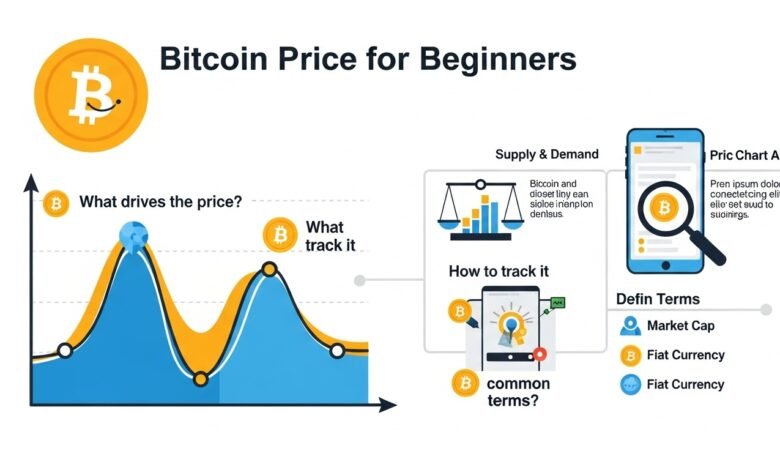
Bitcoin price for beginners, you’re not alone. Bitcoin can feel confusing at first because the price moves fast, news headlines are dramatic, and charts look like something from a trading movie. The good news is that understanding Bitcoin’s price is much simpler than it looks. You don’t need to be a trader, you don’t need complicated math, and you definitely don’t need to predict the future to get value from learning how the price works. In this guide, you’ll learn what Bitcoin’s price actually means, where it comes from, how to read it, why it changes, and how beginners can track it confidently without getting overwhelmed.
Bitcoin price for beginners in plain English
When people talk about the Bitcoin price for beginners, they’re usually referring to the current amount of money you would pay to buy one Bitcoin, often shown as Bitcoin price today in a currency like USD. You’ll also see it written as BTC price, since BTC is Bitcoin’s ticker symbol on exchanges and charts.
Bitcoin doesn’t have a single “official” price set by a company or government. Instead, the price is discovered in real time through buying and selling on crypto exchanges. That means the Bitcoin price in USD can vary slightly between platforms, especially during high volatility, but it usually stays very close across major exchanges due to competition and arbitrage. At its core, Bitcoin’s price is simply the most recent price someone agreed to pay when they bought Bitcoin and someone else agreed to sell. Every trade updates the market’s idea of what Bitcoin is worth right now.
What “market price” really means for BTC
The market price is the latest traded price. If the last successful trade happened at $X, most platforms will display that as the live BTC price. If many buyers suddenly want Bitcoin, they compete by offering higher prices, and the price rises. If many sellers rush to sell, they accept lower prices, and the price drops. That’s supply and demand in action.
Why you might see slightly different prices
Even if you search Bitcoin price today, you may notice small differences between exchanges. This can happen because each exchange has its own order book, user activity, fees, and liquidity. For beginners, these small differences usually don’t matter unless you’re actively trading. What matters more is understanding the trend, the volatility, and how to avoid emotional decisions.
Bitcoin price for beginners and how to check it the right way
Most beginners start by Googling Bitcoin price today or opening a crypto app. That’s fine, but it helps to know what you’re looking at so you don’t confuse a flashy number with a smart decision.
You’ll typically see the live price and several related numbers. These related metrics are some of the most searched terms people look up on Google, and they’re worth understanding because they add context to the raw price.
Bitcoin price chart basics: what the chart is telling you
A Bitcoin price chart is a visual history of price movement over time. You can view charts for minutes, hours, days, months, or years. Beginners often make the mistake of checking a 5-minute chart, seeing a small drop, and assuming something is “going wrong.” Zooming out usually changes the story.
A chart is not just about “up or down.” It’s also about speed, pattern, and behavior. When Bitcoin moves quickly, it’s more volatile. When it moves slowly, it’s calmer. That difference matters because volatility affects how you should think about risk.
Bitcoin price in USD vs local currency
If you’re not in the United States, you might still see the Bitcoin price in USD everywhere because USD is the most common reference. Many platforms let you switch to your local currency. The concept is the same: it’s the price of 1 BTC expressed in the currency you’re using.
Volume, market cap, and why they matter for beginners
If you want the Bitcoin price for beginners to make sense, you should understand two common metrics that appear beside the price. Trading volume reflects how much Bitcoin is being bought and sold in a given time period. Higher volume often means stronger interest and sometimes more intense moves. Bitcoin market cap is the total value of all Bitcoin in circulation, calculated as price multiplied by circulating supply. Market cap helps you compare Bitcoin’s size to other assets and understand why moving Bitcoin’s price takes significant money and demand.
Bitcoin price for beginners and what actually moves it
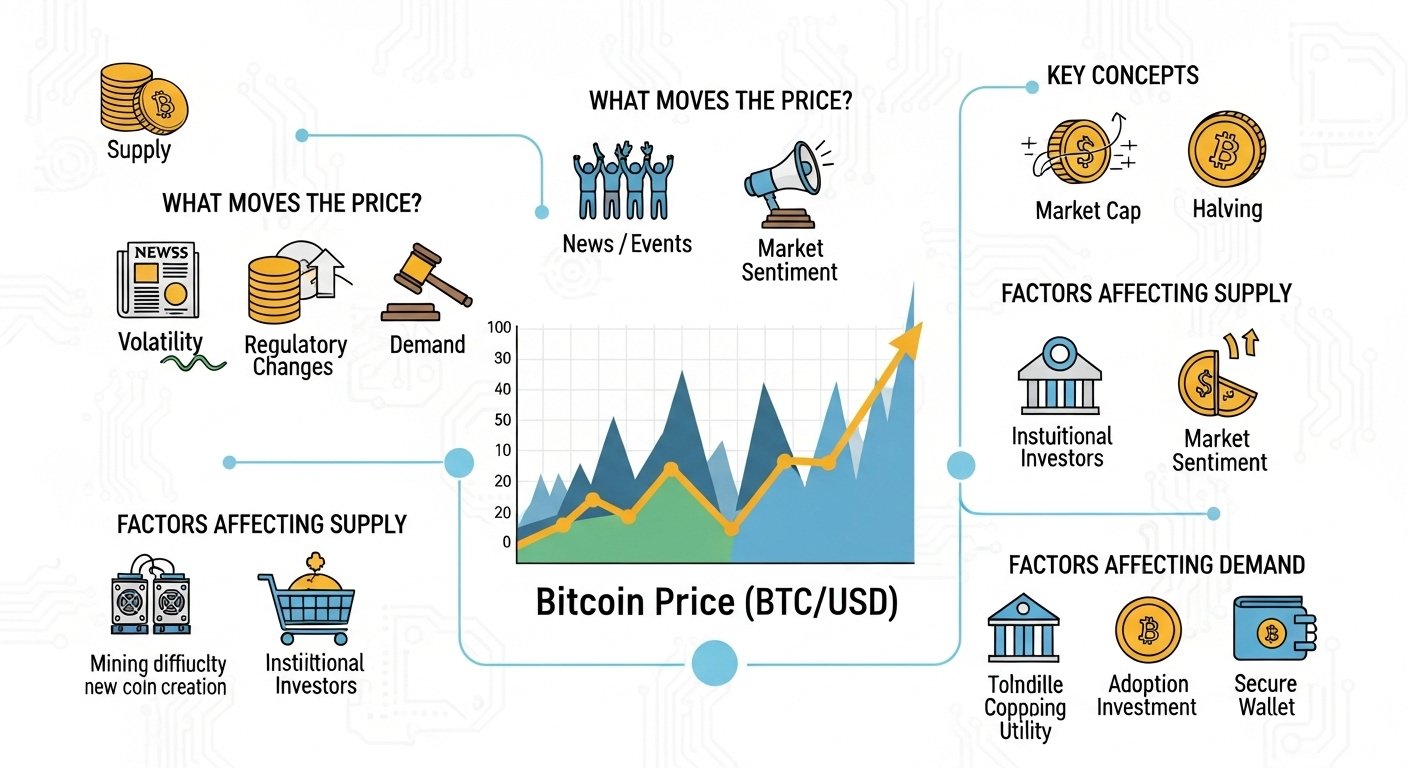
If Bitcoin’s price is set by buyers and sellers, the next question is obvious: what makes buyers and sellers change their minds? Bitcoin’s price moves because people respond to information, incentives, fear, optimism, and liquidity. Some drivers are long-term and predictable. Others are sudden and emotional.
Supply and demand: the simplest driver
Demand increases when more people want exposure to Bitcoin, whether for long-term holding, speculation, or use in crypto ecosystems. Supply increases when holders decide to sell. When demand grows faster than supply, price rises. When supply overwhelms demand, price falls.
Bitcoin also has a limited maximum supply of 21 million coins, which is one reason people compare it to scarce assets. That scarcity narrative influences demand, especially during bullish periods.
News and sentiment: why headlines can spike volatility
Bitcoin reacts strongly to headlines. Positive news can increase confidence and bring new buyers. Negative news can create panic selling. That’s why beginners sometimes feel like the market is “controlled by news.” In reality, news changes expectations, and expectations change trading behavior.
A key beginner lesson is that not every headline matters equally. Some news changes long-term fundamentals. Some news only changes short-term emotion. If you’re learning Bitcoin price for beginners, your goal is to tell the difference.
Macro trends: interest rates, inflation, and global risk
Bitcoin often moves with broader “risk-on” or “risk-off” market behavior. When investors feel confident, they may buy growth assets, including crypto. When fear rises, some investors reduce risk, which can pressure Bitcoin’s price. Interest rates and inflation expectations can influence this behavior. Beginners don’t need to become economists, but it helps to know that Bitcoin doesn’t move in isolation.
Whale activity and liquidity: why big players can shake the price
Large holders, sometimes called whales, can influence short-term price by placing big orders. Low liquidity periods can amplify moves because fewer orders are available at each price level. This is one reason sudden drops or spikes can happen faster than beginners expect.
How to read a Bitcoin price chart as a beginner
Learning Bitcoin price for beginners becomes much easier when charts stop feeling like random noise. You don’t need advanced technical analysis. You just need a few core ideas that help you see structure.
Timeframes: the biggest beginner mistake is zooming in too far
A short timeframe shows small fluctuations. A longer timeframe shows broader trends. If you’re investing for months or years, your decisions shouldn’t be based on minute-to-minute changes. When beginners focus only on the short term, they can become reactive. When you zoom out, you can often see that what felt like a “crash” was a normal pullback in a long-term trend.
Candles vs line charts: what you’re actually seeing
A line chart typically shows closing prices, making it simple and clean. Candlestick charts show more detail: opening price, closing price, and the highs and lows during that time period. Beginners can start with line charts, then move to candlesticks if they want deeper insight.
Support and resistance in beginner terms
Support is a price area where buying tends to appear, slowing declines. Resistance is a price area where selling tends to appear, slowing rises. These levels form because traders remember prices where big moves started before, and they react when price returns. You don’t need perfect accuracy. Even noticing that price repeatedly struggles around the same zone helps you understand market behavior.
Trend direction: an easy way to avoid emotional decisions
If price generally makes higher highs and higher lows over time, that’s an uptrend. If it generally makes lower highs and lower lows, that’s a downtrend. If it’s moving sideways, it’s consolidating. For Bitcoin price for beginners, trend awareness matters because beginners often buy after a big rally out of excitement, then panic sell after a drop. A trend-based perspective helps reduce that emotional loop.
Why Bitcoin is so volatile and why that’s normal
One of the first shocks beginners experience is volatility. Bitcoin can rise or fall dramatically compared to traditional assets. This doesn’t automatically mean Bitcoin is “broken.” It means the market is still evolving, and participants respond quickly to new information and liquidity changes.
Volatility is the price of opportunity and risk
Bitcoin’s large moves are part of what attracts people, but they also create risk. If you’re learning Bitcoin price for beginners, you should treat volatility like weather. You can’t control it, but you can prepare for it.
Liquidity cycles and leverage
Crypto markets often include leverage, which means traders borrow money to amplify bets. When price moves against leveraged positions, liquidations can accelerate price movement. This is one reason drops can be fast and sharp.
Emotional markets and social influence
Bitcoin is heavily discussed online. That creates emotional feedback loops where excitement spreads quickly and fear spreads even faster. Beginners benefit from simple guardrails: avoid impulsive trades, avoid investing money you need soon, and don’t treat short-term noise as a verdict on long-term value.
Practical ways beginners can follow Bitcoin price today without getting stressed
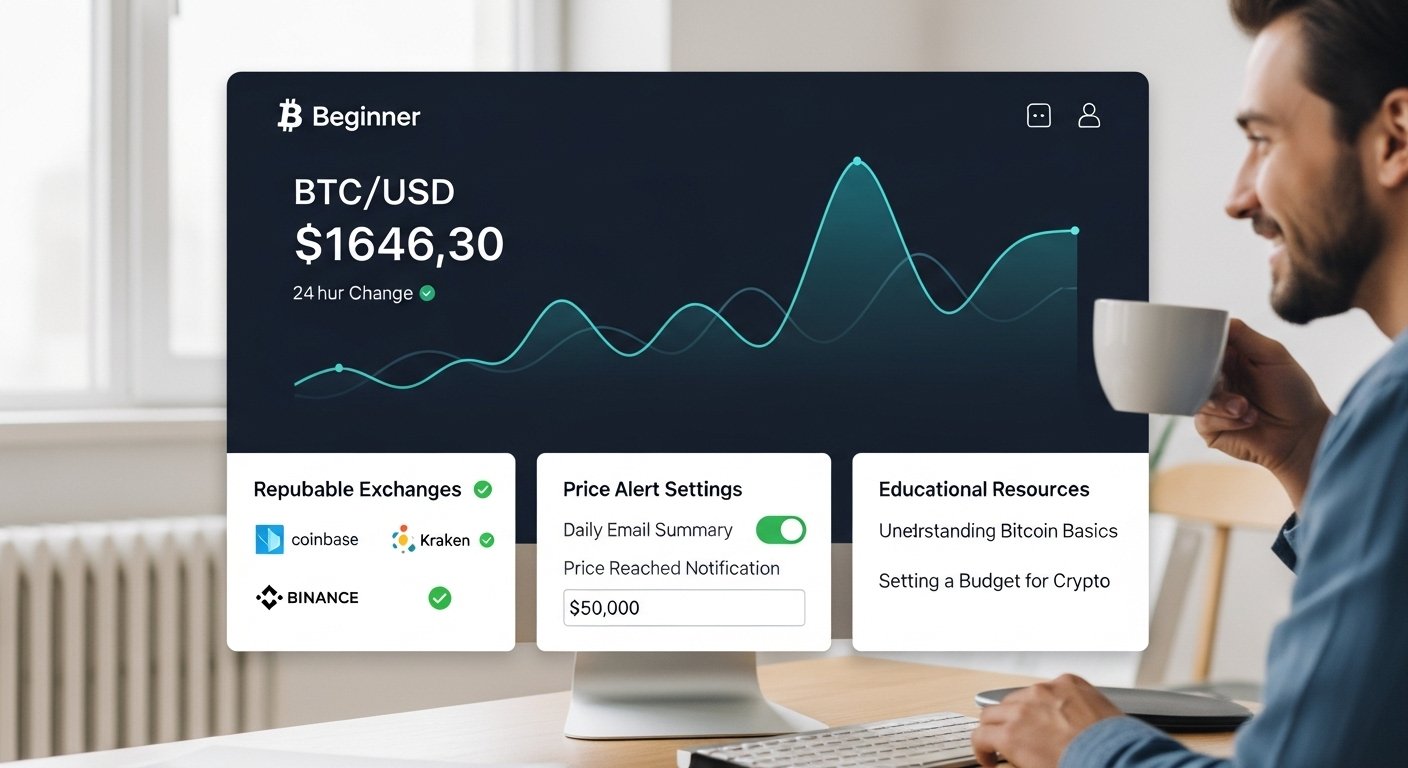
Tracking Bitcoin price today can become addictive if you refresh charts constantly. Beginners often think more checking equals more control, but it often produces the opposite: more anxiety and worse decisions.
Set a checking schedule and stick to it
If your goal is learning and long-term investing, checking once a day or a few times a week is often enough. If your goal is education, you can check more, but focus on patterns, not panic.
Use price alerts instead of constant refreshing
Price alerts help you stay informed without living on charts. They also reduce emotional overreaction because you’re responding to a meaningful level rather than every tiny movement. If you’re serious about Bitcoin price for beginners, learning to observe calmly is a superpower.
Compare price with context metrics
Instead of staring only at the price, look at broader context like trend direction, volume, and major news categories. The point isn’t to predict every move. It’s to understand why moves happen.
Beginner investing approach and how it connects to Bitcoin price for beginners
Many people who search Bitcoin price for beginners actually want to know whether it’s a good time to buy. The honest answer is that no one can guarantee the “best” time. But beginners can use simple, proven approaches that reduce regret.
Long-term mindset vs short-term guessing
Short-term price prediction is difficult even for professionals. A beginner-friendly approach is to focus on long-term goals and risk management rather than trying to time every swing. This is also why many people search terms like Bitcoin price prediction or BTC price prediction. Predictions are everywhere, but they’re not a plan. A plan is something you can follow even when the market surprises you.
Cost averaging: why it can help beginners
A common beginner strategy is to spread purchases over time rather than buying all at once. This reduces the pressure of picking the perfect moment. It also smooths out volatility because you buy at different prices across months. This strategy connects directly to Bitcoin price for beginners because it turns price swings into a normal part of the process rather than a crisis.
Adoption and real-world use
When more individuals, businesses, and institutions adopt Bitcoin, demand can rise. Adoption doesn’t always move price immediately, but it can shape long-term perception and confidence.
Regulation and legal clarity
Regulation can create fear when it’s uncertain, and confidence when it’s clear. Markets dislike ambiguity. When new rules appear, traders often react quickly, which can move the BTC price even if long-term impact remains unclear.
Bitcoin halvings and supply schedule
Bitcoin has a built-in supply schedule that reduces the rate of new Bitcoin issuance over time. This event is commonly discussed and often searched because it can influence long-term supply dynamics and market narratives.
Security, infrastructure, and accessibility
As wallets, exchanges, custody solutions, and payment tools improve, the friction to participate decreases. When participation becomes easier, demand can grow. This can indirectly influence Bitcoin price for beginners because the market becomes more accessible to new entrants.
Conclusion
Learning Bitcoin price for beginners is less about predicting the next move and more about understanding what the price represents, why it changes, and how to stay calm while the market does what it always does. When you focus on trends, context, and a simple plan, the price becomes information instead of stress.
If you want to feel confident, start tracking Bitcoin price for beginners with a consistent chart source, zoom out to see the bigger picture, and use a long-term mindset that keeps emotions out of your decisions. If you want, tell me your country and whether your goal is long-term investing or short-term trading, and I’ll tailor a beginner-friendly plan for tracking Bitcoin price for beginners without overwhelm.