Blockchain Technology Solutions for Business Growth and Innovation
blockchain technology solutions for business to cut costs, boost trust, and automate workflows with smart, scalable adoption.


Businesses don’t struggle with a lack of ideas. They struggle with trust gaps, slow processes, fragmented data, and costly intermediaries. That’s exactly where blockchain technology solutions for business can make a measurable difference. Instead of relying on one central database that can be edited, mis-synced, or attacked, blockchain uses distributed ledger technology to create a shared source of truth that multiple parties can trust.
The result is fewer disputes, faster reconciliations, better auditability, and new digital business models that weren’t practical before. Whether you’re trying to improve data security, streamline vendor onboarding, bring supply chain transparency to procurement, or enable automated agreements through smart contracts, the right blockchain approach can turn operational friction into competitive advantage. The key is understanding where blockchain fits, where it doesn’t, and how to adopt it without disrupting the business you’ve already built.
What Are Blockchain Technology Solutions for Business?
At a practical level, blockchain technology solutions for business are systems that use a blockchain network to store, validate, and share data or transactions across multiple stakeholders. The “solution” part matters because you’re not buying blockchain for its novelty. You’re applying it to solve a business problem like verifying product authenticity, tracking ownership, automating multi-party approvals, or reducing manual audits.
A blockchain is a database, but it behaves differently from traditional databases. Records are grouped into blocks, linked in sequence, and protected by cryptographic methods. The network agrees on what’s valid through a consensus mechanism, which reduces the risk of tampering. This makes blockchain especially useful when multiple organizations must collaborate but don’t fully trust one another.
In modern blockchain for business deployments, the most common forms are private blockchain networks and permissioned consortium networks, where access is controlled and participants are known. Public networks also play a role, especially when companies need broad transparency, public verification, or open ecosystem participation. The best option depends on regulation, data sensitivity, performance needs, and the number of stakeholders involved.
The Business Problems Blockchain Solves Best
Blockchain is not a replacement for every system. It excels when shared truth matters. If your company has repeated disputes over “whose records are correct,” or you spend time reconciling the same transaction across systems, enterprise blockchain solutions can reduce that drag.
The strongest fits include multi-party processes, long supply chains, asset lifecycle tracking, compliance-heavy reporting, and situations where identity, ownership, and provenance must be provable. When the goal is internal analytics or simple app workflows, traditional databases are usually faster and cheaper.
Blockchain vs Traditional Databases in Business Settings
A typical database is optimized for speed, control, and centralized administration. Blockchain is optimized for shared governance, tamper resistance, and accountability. With blockchain integration, the goal is rarely to replace all existing databases. Instead, blockchain becomes a shared verification layer that connects departments, partners, and regulators to the same validated events.
Blockchain Technology Solutions for Business That Deliver ROI
When decision-makers ask whether blockchain is worth it, they’re really asking whether it reduces costs, increases revenue, lowers risk, or improves customer trust. Blockchain technology solutions for business can do all four when used strategically. One common ROI path is operational efficiency. Many industries rely on manual checks, duplicated paperwork, and slow reconciliations between buyer, seller, bank, insurer, and auditor.
Blockchain reduces the back-and-forth by making events verifiable in one shared ledger. Another ROI path is risk reduction through stronger audit trails and improved data security. A third path is new revenue models through tokenization and digital asset infrastructure, especially in finance, real estate, and media rights.
H3: Supply Chain Transparency and Provenance Tracking
A global supply chain can involve manufacturers, suppliers, freight providers, customs, warehouses, distributors, and retailers. Each party runs its own systems, so data drifts, documents get re-entered, and disputes become common. With blockchain technology solutions for business, supply chain events can be written to a shared ledger, giving every authorized participant the same verified timeline.
This is where supply chain transparency becomes a competitive differentiator. Brands can prove sustainability claims, verify ethical sourcing, and reduce counterfeit risk. Procurement teams can shorten investigations and improve vendor performance metrics because the data is consistent across parties.
Smart Contracts for Automated Agreements
Smart contracts are self-executing code that runs when conditions are met. In business terms, they automate workflows that normally require multiple approvals and manual verification. For example, a contract can release payment when shipping milestones are confirmed, or enforce penalties when service levels are missed.
This doesn’t mean “set it and forget it.” It means fewer manual steps, fewer opportunities for error, and clearer accountability. When paired with proper governance and testing, smart contracts can shorten cycle times and reduce administrative overhead.
Cross-Border Payments and Faster Settlement
International transactions often move slowly because they pass through multiple intermediaries and compliance checks. Blockchain-based rails can improve speed and transparency, which is why cross-border payments is frequently associated with blockchain for business discussions. For firms managing global suppliers or international payroll, improved settlement times can reduce working capital lock-up and minimize reconciliation headaches. The practical value comes from end-to-end visibility, predictable fees, and fewer exceptions.
Digital Identity, Access Control, and Data Security
Identity is at the heart of compliance, onboarding, and fraud prevention. Blockchain can support verifiable credentials that allow users or partners to prove facts without oversharing sensitive data. This strengthens data security and reduces the risk of storing unnecessary personal information.
In regulated environments, blockchain-based identity workflows can speed up onboarding while preserving auditability. When paired with proper key management and privacy techniques, identity-focused enterprise blockchain solutions reduce friction without sacrificing control.
Tokenization and New Business Models
Tokenization is the process of representing real-world assets or rights as digital tokens. This can include loyalty points, carbon credits, invoices, real estate interests, or intellectual property licensing. In many cases, tokenization improves liquidity, traceability, and automation of transfers. For business leaders, the value isn’t hype. It’s operational clarity and new distribution channels. When blockchain development services are aligned with legal, compliance, and market strategy, tokenization can create scalable products that are easier to track and audit.
How Enterprise Blockchain Solutions Work in the Real World
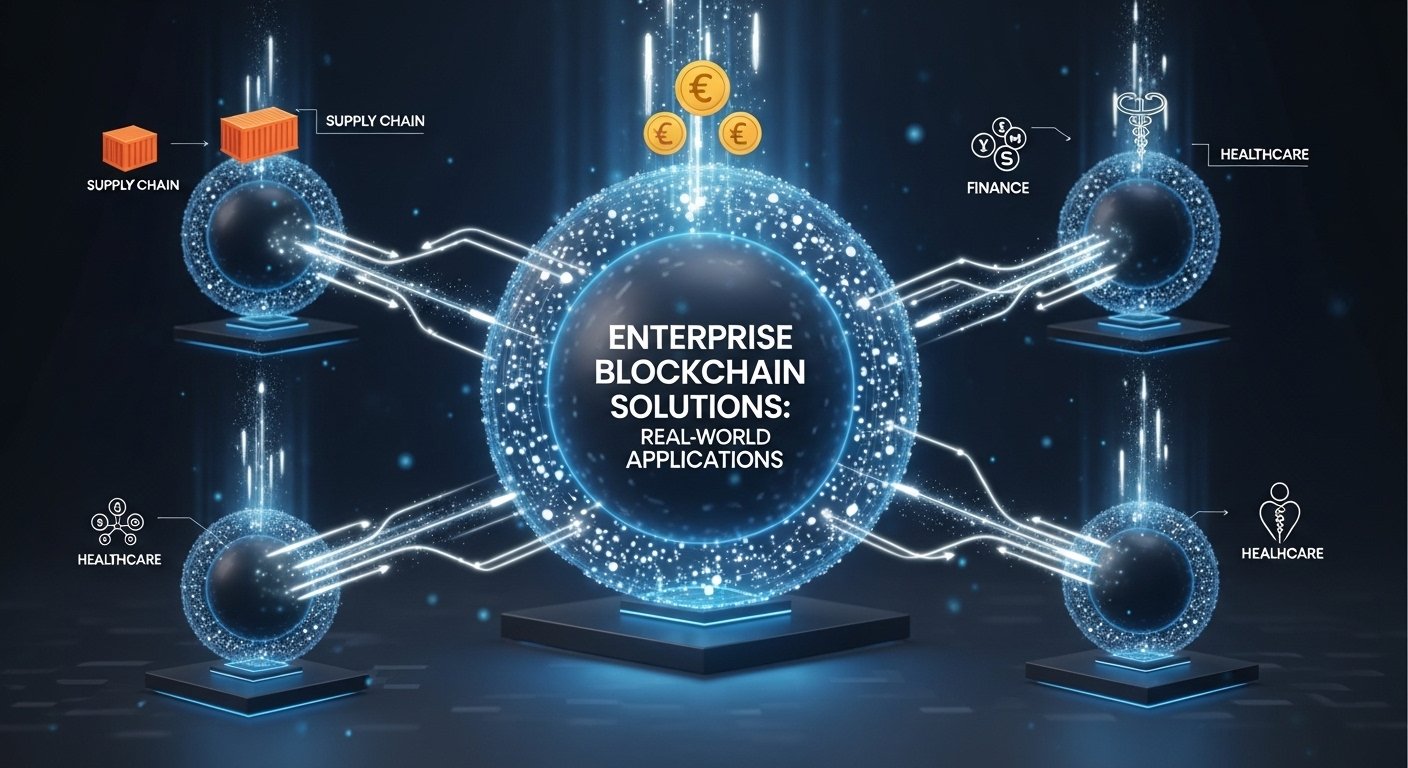
Most successful enterprise blockchain solutions follow a hybrid architecture. Core systems like ERP, CRM, and data warehouses continue to operate as they do today. Blockchain acts as a shared verification layer that records critical events and references to documents, rather than stuffing every detail on-chain. This is where blockchain integration becomes the defining skill. It’s not just building a chain. It’s connecting the chain to existing data flows, ensuring events are captured at the right points, and designing permissions so only the right parties can read or write.
Permissioned Networks and Private Blockchain
Many companies choose private blockchain or permissioned networks because they need performance, confidentiality, and known participants. Permissioned systems can provide higher throughput, easier governance, and compliance-friendly controls. Frameworks like Hyperledger are popular in enterprise settings because they support modular architecture and fine-grained permissions. Public networks like Ethereum are also used, especially when businesses want to leverage a large ecosystem or public verification. The best choice depends on your trust model, partner participation, and regulatory posture.
Interoperability and Blockchain Integration
A business blockchain rarely operates in isolation. You may need to connect it to supplier portals, IoT devices, mobile apps, identity providers, payment systems, and analytics tools. Robust blockchain integration ensures that on-chain events match real-world events and that exceptions are handled cleanly. Interoperability also matters when data must move across networks. Businesses often collaborate with partners who already use different systems. The long-term winners are the solutions designed for integration from day one, not bolted-on prototypes.
Choosing Blockchain Development Services for Your Business
Selecting blockchain development services is less about flashy demos and more about delivery discipline. Enterprise-grade blockchain solutions require architecture, security, testing, governance, and change management. You want a team that can align technical design with business outcomes, compliance requirements, and user adoption.
What to Look for in a Delivery Partner
A reliable partner speaks in operational outcomes, not jargon. They should be able to explain the trust model, the permission model, the data model, and the integration plan in business language. They should also have a clear approach to security reviews, key management, and data security hardening. Experience with enterprise blockchain solutions should include working with compliance teams, handling audits, and designing for long-term maintainability. The best solutions are not just “built,” they’re operated.
Cost, Timeline, and Adoption Realities
Blockchain adoption typically succeeds when it begins with a narrow, high-friction workflow that involves multiple parties and measurable pain. Costs depend on complexity, integration, and governance. The real drivers are stakeholder alignment and data quality, not just code. A practical path starts with a proof of value that is tied to a real process, then expands once partners see results. The goal is steady adoption, not a big-bang overhaul.
Industry Use Cases of Blockchain for Business
Retail and consumer brands use blockchain to fight counterfeits and validate sustainability claims. Energy and utilities explore blockchain for peer-to-peer settlement, certificate tracking, and carbon accounting. Government and education often focus on credentials and identity, making distributed ledger technology useful for verification and fraud reduction. A Practical Adoption Roadmap for Blockchain Technology Solutions for Business A dependable approach begins with identifying a process where multiple parties exchange data and frequently dispute records. Then it defines the exact events that need to be shared and validated. After that, it designs the permission model and integration points.
A successful roadmap also plans for user experience. If entering data into the blockchain feels like extra work, adoption suffers. The best blockchain technology solutions for business are often invisible to the end user, embedded into existing tools and workflows. As the solution matures, businesses expand the network gradually, adding partners and additional processes. Measurement is key. If the solution doesn’t reduce time, reduce disputes, reduce fraud, or create revenue, it should be revised.
Security, Compliance, and Governance in Enterprise Blockchain Solutions
Security is not only about preventing hacks. It’s about maintaining trust. Enterprise blockchain solutions require clear governance and compliance mapping because multiple stakeholders rely on the same shared truth. A strong governance model clarifies participant onboarding, permissioning, data retention, upgrade processes, and dispute resolution. Compliance mapping clarifies what data can be shared, what must remain private, and how to support audits.
Privacy approaches may include storing sensitive data off-chain and referencing it through hashes, which helps maintain confidentiality while preserving integrity. For many organizations, the best approach is a permissioned setup with strong controls, regular audits, and clear operational ownership. That is how blockchain technology solutions for business remain stable long after the pilot phase.
Conclusion
The real promise of blockchain technology solutions for business isn’t trend-chasing. It’s measurable improvements in trust, speed, auditability, and automation across multi-party processes. When applied to the right workflows, enterprise blockchain solutions can reduce disputes, strengthen data security, unlock supply chain transparency, and enable modern models like tokenization and smart contracts without sacrificing control.
If you want to move from curiosity to outcomes, start with one high-friction process, define success metrics, and build with integration and governance at the center. If you’re ready to explore blockchain technology solutions for business that fit your industry, reach out for a tailored assessment and roadmap that prioritizes ROI over hype.